Understanding the legal intricacies of trademark registration in China can be quite challenging. In this new article, together with Business Panda—a company that helps Russian brands enter the Chinese market—we will cover a range of formal issues related to trademark registration in China, from preparing the required documents to the procedure timeline. We’ll also look at when trademark registration is advisable, why adapting the name is necessary, and what translation options can be used.
Trademark Registration in China
Registering a trademark in China is advisable in the following cases:
The Necessity of Adaptation
A major challenge in trademark protection is that, in addition to registering their “original” trademarks (usually in Latin letters), companies are advised to adapt and register “Chinese versions” of their trademarks. This is, firstly, to earn local consumer trust and, secondly, to maximize legal protection in China.
Well-chosen “Chinese” trademarks can be crucial to a brand’s success in China. Registering a name in Latin script does not provide legal protection for identical/similar names in Chinese characters. Therefore, registering a Chinese-language version of the mark is highly recommended. Also, if you don’t create a Chinese version of your trademark, Chinese consumers are very likely to create one themselves—by translation, transliteration, or otherwise—which could result in associations or emotions not intended by the original brand owner. Since a quarter of the world’s consumers are Chinese, adapting your trademark for this market is extremely important. Not only the meaning, but also the sound, “tone,” and even the visual impression of the Chinese characters can significantly impact your brand’s reputation.
Filing an Application for Trademark Registration
Foreign applicants must file through certified local patent attorneys.
The list of attorney services may include:
Main requirements for the document package:
Registration Procedure and Duration
In total, registration takes from 11 months to 1.5–2 years.
Trademark protection in China lasts for 10 years from the registration date, and can be renewed for another 10 years. You must apply for renewal 12 months before expiry or within 6 months after (with an extra fee). If not renewed in time, the trademark is canceled. To maintain exclusive rights, a new application must be filed.
Examples of Infringement
Trademark Registration in China
Registering a trademark in China is advisable in the following cases:
- When selling goods in the country. The trademark should be registered well in advance of market entry, as local manufacturers react quickly to popular trends.
- When placing orders with Chinese factories. This allows you to prevent attempts to produce or sell unauthorized batches under a well-known trademark.
- For protection against "patent trolls." If you don’t register your trademark rights, Chinese partners, distributors, or third parties may do so. Without their consent, you won’t be able to place manufacturing orders or sell goods. In such cases, the law will be on the side of whoever registered the mark. Litigation may drag on for years, and a quicker business partner could raise the price or start selling your product themselves.
- When entering other markets. Even if you’re not currently planning to sell in China, this step will help prevent Chinese manufacturers from flooding the market with popular products under your trademarks. Also, note that goods made or sold in China may infringe the rights of local companies, so a preliminary trademark check is essential.
The Necessity of Adaptation
A major challenge in trademark protection is that, in addition to registering their “original” trademarks (usually in Latin letters), companies are advised to adapt and register “Chinese versions” of their trademarks. This is, firstly, to earn local consumer trust and, secondly, to maximize legal protection in China.
Well-chosen “Chinese” trademarks can be crucial to a brand’s success in China. Registering a name in Latin script does not provide legal protection for identical/similar names in Chinese characters. Therefore, registering a Chinese-language version of the mark is highly recommended. Also, if you don’t create a Chinese version of your trademark, Chinese consumers are very likely to create one themselves—by translation, transliteration, or otherwise—which could result in associations or emotions not intended by the original brand owner. Since a quarter of the world’s consumers are Chinese, adapting your trademark for this market is extremely important. Not only the meaning, but also the sound, “tone,” and even the visual impression of the Chinese characters can significantly impact your brand’s reputation.
Filing an Application for Trademark Registration
Foreign applicants must file through certified local patent attorneys.
The list of attorney services may include:
- Preparing the document package
- Searching for identical or confusingly similar marks already registered in China
- Filing the application
- Translation into Chinese
- Notarization
- Document forwarding
- Liaison with the trademark office and customs authorities
Main requirements for the document package:
- Application filed in Chinese, one copy.
- The document must specify the applicant’s name and address, image of the trademark, list of goods/services covered (according to the Nice Classification), proof of business registration (or personal ID copy), power of attorney for the patent attorney (including description of authority), citizenship (for foreign applicants), and any other required materials.
- Color marks require color images.
- The trademark image must be clear (a photograph is permitted).
- Three-dimensional marks must include a drawing showing at least three views.
- Sound samples must be submitted on a disc with a single audio file (under 5MB in .wav or mp3), and the application must include a verbal description.
- If a person’s likeness is used as part of the mark, their authorization is required.
- The application must be signed by the legal entity’s seal or by the individual applicant.
Registration Procedure and Duration
- Selection of Nice Classification classes;
- Application submission and initial review for compliance (including fee payment and assigning an application number): 1–2 days;
- Formal examination and notification of passing (1 month). If corrections are required, the applicant or representative is notified; changes must be made within 30 days, or the application is annulled.
- Substantive examination: 6–8 months. If refused, a notice is sent indicating reasons. The refusal can be appealed to the Appeal Board within 15 days, and their decision may be challenged in court within 30 days after notification.
- Publication in the official bulletin. During a 3-month window, any interested party may file a protest. This is reviewed within 1 year.
- Registration certificate issued: about 2 months.
In total, registration takes from 11 months to 1.5–2 years.
Trademark protection in China lasts for 10 years from the registration date, and can be renewed for another 10 years. You must apply for renewal 12 months before expiry or within 6 months after (with an extra fee). If not renewed in time, the trademark is canceled. To maintain exclusive rights, a new application must be filed.
Examples of Infringement
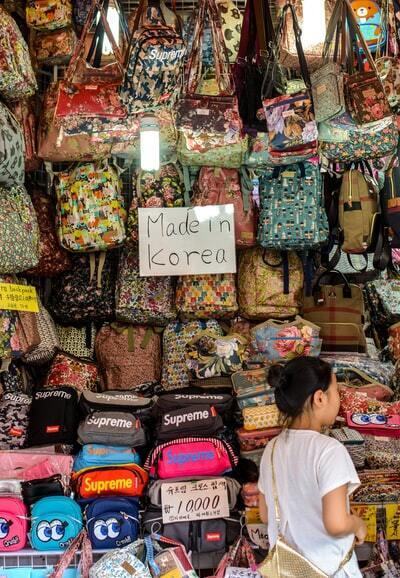
One illustrative example is the case involving the Primorsky company "Arsenyevsky Dairy Plant," which faced counterfeiting of its ice cream trademark. This company had been successfully selling ice cream on the Chinese market since 2015, and its products had gained a certain level of popularity among local consumers. Just two months after a significant surge in sales, counterfeit products appeared on the market, marked with a similar designation with only minor differences.
As a result, sales plummeted from 200 tons per month to just 18 tons. Legal proceedings took almost two years and achieved nothing, as the competitor had registered the trademark in China.
Even world-renowned manufacturers suffer from counterfeiting. In 2016, an investigation began into the unlawful use of famous cosmetics brands such as Givenchy, Sea Blue Enigma, and others. The total damage was estimated at 300 million yuan. Counterfeit products were sold through two online stores on the Taobao platform. As a result of the investigation, police seized over 4,000 counterfeit items, and the violators received prison sentences ranging from 1 to 4 years.
Elon Musk’s automotive giant, which produces electric vehicles, suffered a trademark grab when the Tesla trademark was registered in China by a local resident three years after Tesla was founded in the USA. After lengthy litigation, Tesla eventually won. The question remains, however, at what cost.
Castel Wines was less fortunate and had to pay a hefty fine. According to a ruling by the highest court of Zhejiang province, based on the "first-to-file" principle in China’s trademark law, French wine producer Castel Wines lost the right to use its brand. "Ka Si Te"—a transliteration of "Castel" into Chinese—had to pay 33,734,546.26 yuan (over $5 million!) to Shanghai Banti Wine Company and the Spanish-Chinese company Li Dao Zhi. Six years of fighting brought no success.
Translation Methods
There are three main methods of translating foreign brand names into Chinese: literal translation (calquing), transliteration, and adaptation.
As a result, sales plummeted from 200 tons per month to just 18 tons. Legal proceedings took almost two years and achieved nothing, as the competitor had registered the trademark in China.
Even world-renowned manufacturers suffer from counterfeiting. In 2016, an investigation began into the unlawful use of famous cosmetics brands such as Givenchy, Sea Blue Enigma, and others. The total damage was estimated at 300 million yuan. Counterfeit products were sold through two online stores on the Taobao platform. As a result of the investigation, police seized over 4,000 counterfeit items, and the violators received prison sentences ranging from 1 to 4 years.
Elon Musk’s automotive giant, which produces electric vehicles, suffered a trademark grab when the Tesla trademark was registered in China by a local resident three years after Tesla was founded in the USA. After lengthy litigation, Tesla eventually won. The question remains, however, at what cost.
Castel Wines was less fortunate and had to pay a hefty fine. According to a ruling by the highest court of Zhejiang province, based on the "first-to-file" principle in China’s trademark law, French wine producer Castel Wines lost the right to use its brand. "Ka Si Te"—a transliteration of "Castel" into Chinese—had to pay 33,734,546.26 yuan (over $5 million!) to Shanghai Banti Wine Company and the Spanish-Chinese company Li Dao Zhi. Six years of fighting brought no success.
Translation Methods
There are three main methods of translating foreign brand names into Chinese: literal translation (calquing), transliteration, and adaptation.
- Transliteration involves rendering the sounds of one language with the characters of another, preserving the phonetic basis of the word. This method is suitable when the brand name’s sound is the main factor in recognition and selection, for example, when the name includes the founder or place of origin. Examples include Adidas (“阿迪达斯” [Ādídásī]), Nokia (“诺基亚” [Nuòjīyà]), Siemens (“西门子” [Xīménzi]). Luxury brands often use transliteration as well to make their names easier for Chinese consumers to pronounce, as with Gucci – "古姿" [Gǔzī]. Another example of the complexity of transliteration is Olympus – "奥林巴斯" [Àolínbāsī]. This translation nearly tests the boundaries of Chinese perception: most Chinese words consist of one or two characters, and words of three or more are often recently borrowed and foreign. Anything exceeding three may seem too complex or unnatural, making memorization and perception more difficult.
- Literal translation (calquing): This technique works well for brands whose names contain symbolism that embodies the brand. Perhaps the best example is Apple. The word itself means "apple," which is also the company’s symbol, so its Chinese name is simply "apple" – "苹果" [Píngguǒ], which sounds nothing like the English name. Microsoft did the same, with “微软” [Wēiruǎn], translating to "micro" and "soft." Through calquing, a company can communicate the original symbol or meaning of its brand to Chinese consumers. Swiss company Nestle approached calquing differently, choosing to translate the symbolism ("bird’s nest" – "雀巢" [Quècháo]), as opposed to its founder’s name. Marriott hotels translated their name as “Ten Thousand Glories” – "万豪" [Wànháo], based on the image they wished to present, completely ignoring both the sound and direct meaning.
- Adaptation: The most complex but, when done properly, the most effective approach. This method seeks to preserve both the phonetic sound and the meaning, conveying both the brand’s essence and associations in a way Chinese consumers will understand. Companies don’t simply translate their name word for word, but imbue it with meaning to clarify the brand’s essence and create a mini slogan understandable to Chinese consumers, while avoiding awkward pronunciations. The result is usually something simple and meaningful: for example, BMW became “Precious Horse” – "宝马" [Bǎomǎ], and Reebok "Fast Steps" – "锐步" [Ruì bù]. For success abroad, Russian companies must appeal to foreign consumers. Yet a marketing campaign that works well at home may have catastrophic consequences when translated if done incorrectly.

Here’s the English translation:
About Business Panda
Business Panda is the operator of the “Russian Commodities Pavilion” project in Chengdu, Sichuan Province, China—one of the largest platforms, bringing together over 1,000 Chinese trading agents.
The Russian Commodities Pavilion is a platform designed to efficiently bring Russian brands' products to the Chinese market, foster cultural, economic, regional, and intergovernmental connections. The project is implemented with the support of the Bureau of Commerce of Chengdu City (PRC).
Business Panda LLC wishes you a successful launch and huge sales volumes in the Chinese export market.
About Business Panda
Business Panda is the operator of the “Russian Commodities Pavilion” project in Chengdu, Sichuan Province, China—one of the largest platforms, bringing together over 1,000 Chinese trading agents.
The Russian Commodities Pavilion is a platform designed to efficiently bring Russian brands' products to the Chinese market, foster cultural, economic, regional, and intergovernmental connections. The project is implemented with the support of the Bureau of Commerce of Chengdu City (PRC).
Business Panda LLC wishes you a successful launch and huge sales volumes in the Chinese export market.