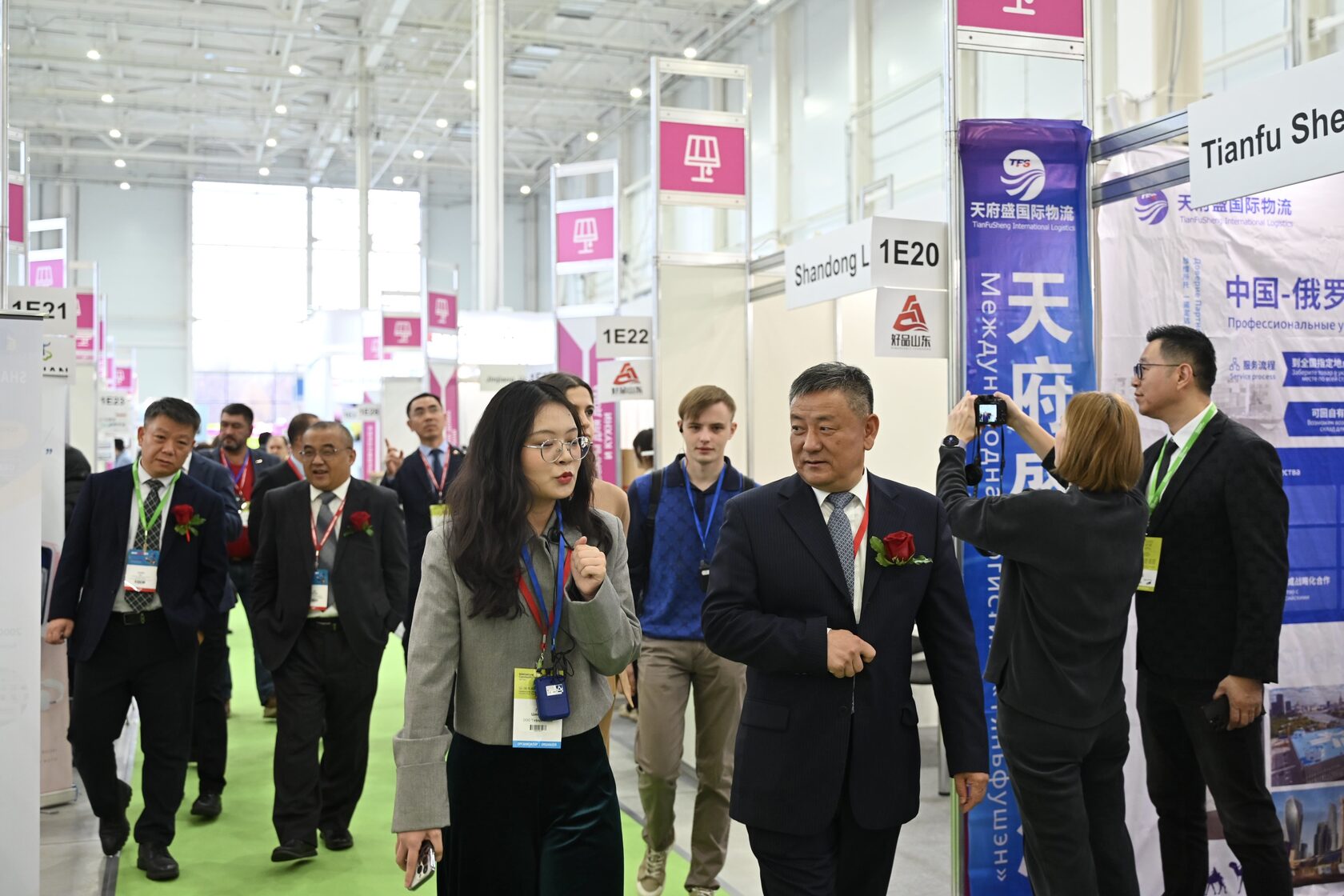
Both industry events—the 8th International Consumer Goods Fair (International / China Commodity Fair) and the 5th National Exhibition of Industrial Equipment and Innovations from China (China Machinery Fair)—will traditionally be held at a single venue in Moscow, from November 12 to 14.
This year, for the first time, the events will take place at a new exhibition venue—the Timiryazev Centre—where developers, manufacturers, distributors, as well as representatives of government bodies and trade associations from Russia, Asia, and the CIS will come together to engage in an open dialogue within the international professional community.
What’s on the agenda
The main focus for experts and participants in the business program of the trade fair will be logistics and finance, particularly settlements between Russia and China and the specifics of today’s trade flows.
The new reality, which market players in the consumer goods sector have already begun to adapt to, still forces businesses to seek creative solutions and approaches in the context of ongoing sanctions.
That is why the agendas of both trade fairs feature the most relevant topics for discussion—for example, the current industry landscape and assessment by market operators, adapting production and business processes, including a reassessment of logistics and financial operations in new conditions, new ideas and ways to attract financing, strategies for ensuring stable supplies and quality-after sales service, as well as ways to reduce dependence on imported components, among others.
For instance, the first day of the International / China Commodity Fair is dedicated to panel sessions on trends and consumer patterns in the home goods segment. Participants and guests will also discuss how to find, select, and build business relationships with manufacturers from China and other countries; they’ll talk about the main trends in legal support for trading in the consumer goods market and specifics of working with marketplaces.
A plenary session organized together with the Russian-Chinese Friendship Society, titled «Industrial Cooperation—A New Era of Partnership between Russia and China in Mechanical Engineering,» will take place as part of the business program on the first day at the China Machinery Fair 2024. The session will be moderated by Sergey Sanakoev, Deputy Chairman of the Russian-Chinese Friendship Society (RCFS) and Chairman of the Commission for Trade and Economic Cooperation and Entrepreneurship.
Throughout the days of the exhibitions, various expert sessions will be held—including theme panels on cross-border payments, customs issues, digitalization, management, and more. In the run-up to the events, we asked participants to share their views on the current situation in their market niches—not only discussing challenges, but also opportunities for the market.
New Challenges and Opportunities in a Time of Change
Pavel Builov, Commercial Director, Vivanto Trading Co LLC:
«The market situation today is unstable; everything is changing very quickly. And in this instability lie both the main challenges and the main opportunities. When the market is stable and the rules of the game are set, entering the market is nearly impossible or very difficult, often requiring huge financial investments. But when the market is unstable, new niches open up. That’s why, despite the overall instability, we are building our operations to establish a presence across all segments and regions that interest us in the next three years, and to ensure fast, safe, and cost-effective payments for our sector.»
Mikhail Nikitin, expert in corporate finance and foreign economic activity (ex-product owner at Tinkoff Bank, Qiwi Bank, OTP Bank):
«Right now, without a doubt, is a time of new opportunities and the chance to apply the deep expertise we’ve accumulated over the years—expertise that isn’t always in demand in quiet times. For example, we developed a fintech startup in 2021 and in February 2022 launched it to the market as a marketplace for attracting bank financing for SMEs. However, we then had to completely revise our business model and transform it into a SaaS platform for foreign trade operations under sanctions pressure. This area has become the most in-demand in the financial market over the past couple of years. And we are one of the first such projects, which is why we are successful,» shared Mikhail Nikitin.
The main focus for experts and participants in the business program of the trade fair will be logistics and finance, particularly settlements between Russia and China and the specifics of today’s trade flows.
The new reality, which market players in the consumer goods sector have already begun to adapt to, still forces businesses to seek creative solutions and approaches in the context of ongoing sanctions.
That is why the agendas of both trade fairs feature the most relevant topics for discussion—for example, the current industry landscape and assessment by market operators, adapting production and business processes, including a reassessment of logistics and financial operations in new conditions, new ideas and ways to attract financing, strategies for ensuring stable supplies and quality-after sales service, as well as ways to reduce dependence on imported components, among others.
For instance, the first day of the International / China Commodity Fair is dedicated to panel sessions on trends and consumer patterns in the home goods segment. Participants and guests will also discuss how to find, select, and build business relationships with manufacturers from China and other countries; they’ll talk about the main trends in legal support for trading in the consumer goods market and specifics of working with marketplaces.
A plenary session organized together with the Russian-Chinese Friendship Society, titled «Industrial Cooperation—A New Era of Partnership between Russia and China in Mechanical Engineering,» will take place as part of the business program on the first day at the China Machinery Fair 2024. The session will be moderated by Sergey Sanakoev, Deputy Chairman of the Russian-Chinese Friendship Society (RCFS) and Chairman of the Commission for Trade and Economic Cooperation and Entrepreneurship.
Throughout the days of the exhibitions, various expert sessions will be held—including theme panels on cross-border payments, customs issues, digitalization, management, and more. In the run-up to the events, we asked participants to share their views on the current situation in their market niches—not only discussing challenges, but also opportunities for the market.
New Challenges and Opportunities in a Time of Change
Pavel Builov, Commercial Director, Vivanto Trading Co LLC:
«The market situation today is unstable; everything is changing very quickly. And in this instability lie both the main challenges and the main opportunities. When the market is stable and the rules of the game are set, entering the market is nearly impossible or very difficult, often requiring huge financial investments. But when the market is unstable, new niches open up. That’s why, despite the overall instability, we are building our operations to establish a presence across all segments and regions that interest us in the next three years, and to ensure fast, safe, and cost-effective payments for our sector.»
Mikhail Nikitin, expert in corporate finance and foreign economic activity (ex-product owner at Tinkoff Bank, Qiwi Bank, OTP Bank):
«Right now, without a doubt, is a time of new opportunities and the chance to apply the deep expertise we’ve accumulated over the years—expertise that isn’t always in demand in quiet times. For example, we developed a fintech startup in 2021 and in February 2022 launched it to the market as a marketplace for attracting bank financing for SMEs. However, we then had to completely revise our business model and transform it into a SaaS platform for foreign trade operations under sanctions pressure. This area has become the most in-demand in the financial market over the past couple of years. And we are one of the first such projects, which is why we are successful,» shared Mikhail Nikitin.
E-commerce, workforce, and service expansion
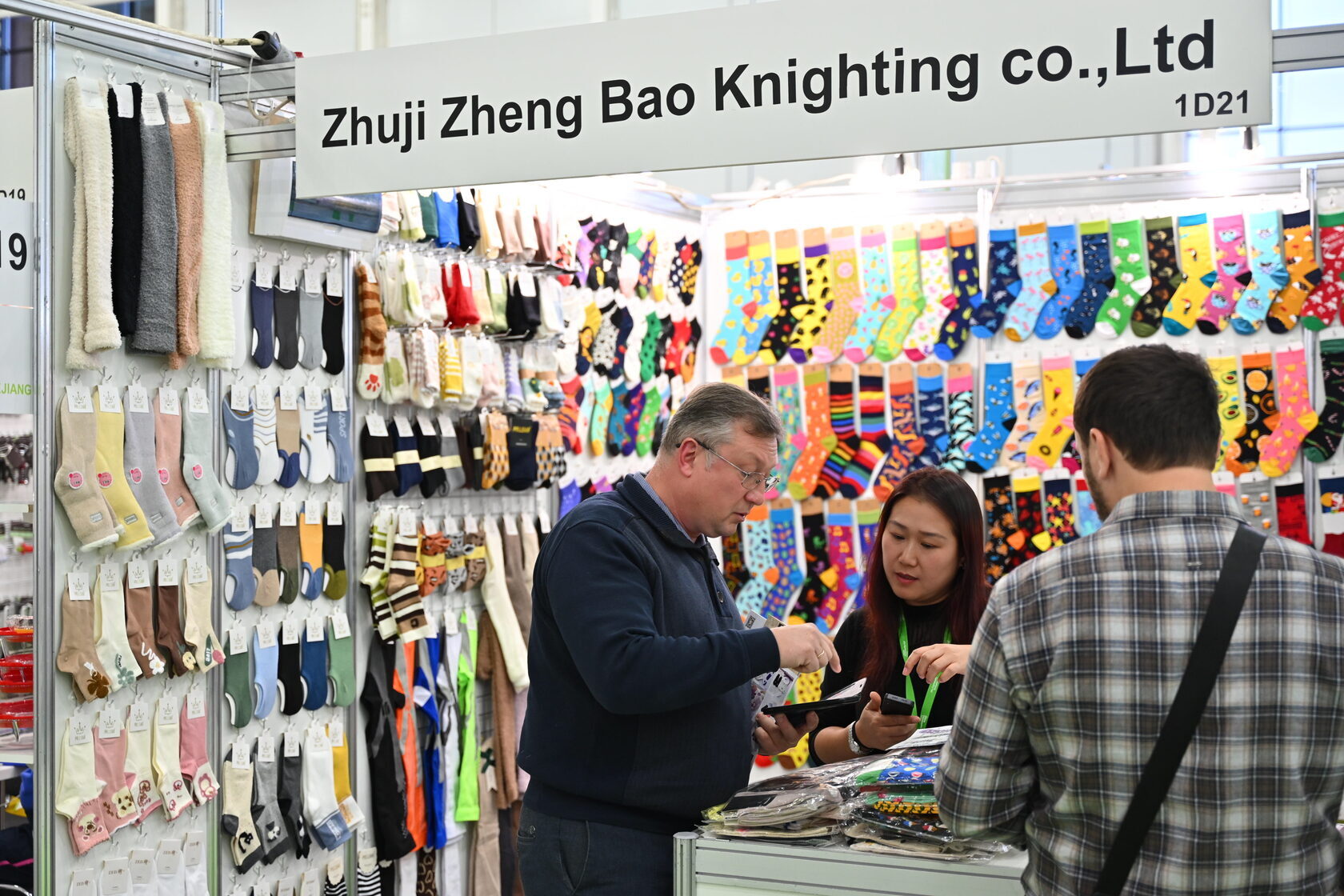
Additionally, experts from the logistics business note that the share of e-commerce is growing significantly year after year, driving the expansion of the range of traditionally offered business services.
UBAI Service Company (headquartered in Beijing):
«Alongside readjusting logistics channels, market players are increasingly focusing on an adaptive tool: special attention to customer needs and expectations. For example, at our company—which helps purchase and deliver goods from China—we decided to rethink our role as ‘just an intermediary’ and focus on improving service quality and the entire supply chain. We realized that by establishing faster and cheaper logistics channels and connecting with factories offering the right prices and better quality, we can provide customers with more competitive products, thus increasing loyalty among existing clients and attracting new ones. We have already set up stable and secure logistics channels that are not affected by sanctions. We deliver goods from $1 per kg and cooperate with more than a thousand factories in China. In the future, we plan to expand transport routes and increase the number of partners.»
As experience shows, today the key factor in minimizing the negative effects of sanctions is a combination of human resources and innovation—together these enable companies to enhance their internal potential.
«Our qualified staff is something our company is truly proud of. Clients expect a personalized approach and understanding of their individual needs. Many of them, before coming to us, had negative experiences with other shipping companies. At first, we have to earn their trust, but after the first shipment, things run smoothly and doubts disappear. We are also implementing modern technologies—real-time tracking, warehouse digitalization, and electronic inventory management, which reduces the risk of errors and speeds up the receipt and dispatch of goods,» commented TigerBro Express.
On one hand, participants unanimously see positive prospects—opportunities that might have gone unnoticed or never opened up if not for the tough conditions. But, as in any situation, there is another side—or even several sides.
It is precisely these behind-the-scenes aspects and potential pitfalls, as well as the diversity of business and industry experience, that participants and guests are invited to discuss and critically reflect upon at the exhibition venue.
Additionally, experts from the logistics business note that the share of e-commerce is growing significantly year after year, driving the expansion of the range of traditionally offered business services.
UBAI Service Company (headquartered in Beijing):
«Alongside readjusting logistics channels, market players are increasingly focusing on an adaptive tool: special attention to customer needs and expectations. For example, at our company—which helps purchase and deliver goods from China—we decided to rethink our role as ‘just an intermediary’ and focus on improving service quality and the entire supply chain. We realized that by establishing faster and cheaper logistics channels and connecting with factories offering the right prices and better quality, we can provide customers with more competitive products, thus increasing loyalty among existing clients and attracting new ones. We have already set up stable and secure logistics channels that are not affected by sanctions. We deliver goods from $1 per kg and cooperate with more than a thousand factories in China. In the future, we plan to expand transport routes and increase the number of partners.»
As experience shows, today the key factor in minimizing the negative effects of sanctions is a combination of human resources and innovation—together these enable companies to enhance their internal potential.
«Our qualified staff is something our company is truly proud of. Clients expect a personalized approach and understanding of their individual needs. Many of them, before coming to us, had negative experiences with other shipping companies. At first, we have to earn their trust, but after the first shipment, things run smoothly and doubts disappear. We are also implementing modern technologies—real-time tracking, warehouse digitalization, and electronic inventory management, which reduces the risk of errors and speeds up the receipt and dispatch of goods,» commented TigerBro Express.
On one hand, participants unanimously see positive prospects—opportunities that might have gone unnoticed or never opened up if not for the tough conditions. But, as in any situation, there is another side—or even several sides.
It is precisely these behind-the-scenes aspects and potential pitfalls, as well as the diversity of business and industry experience, that participants and guests are invited to discuss and critically reflect upon at the exhibition venue.