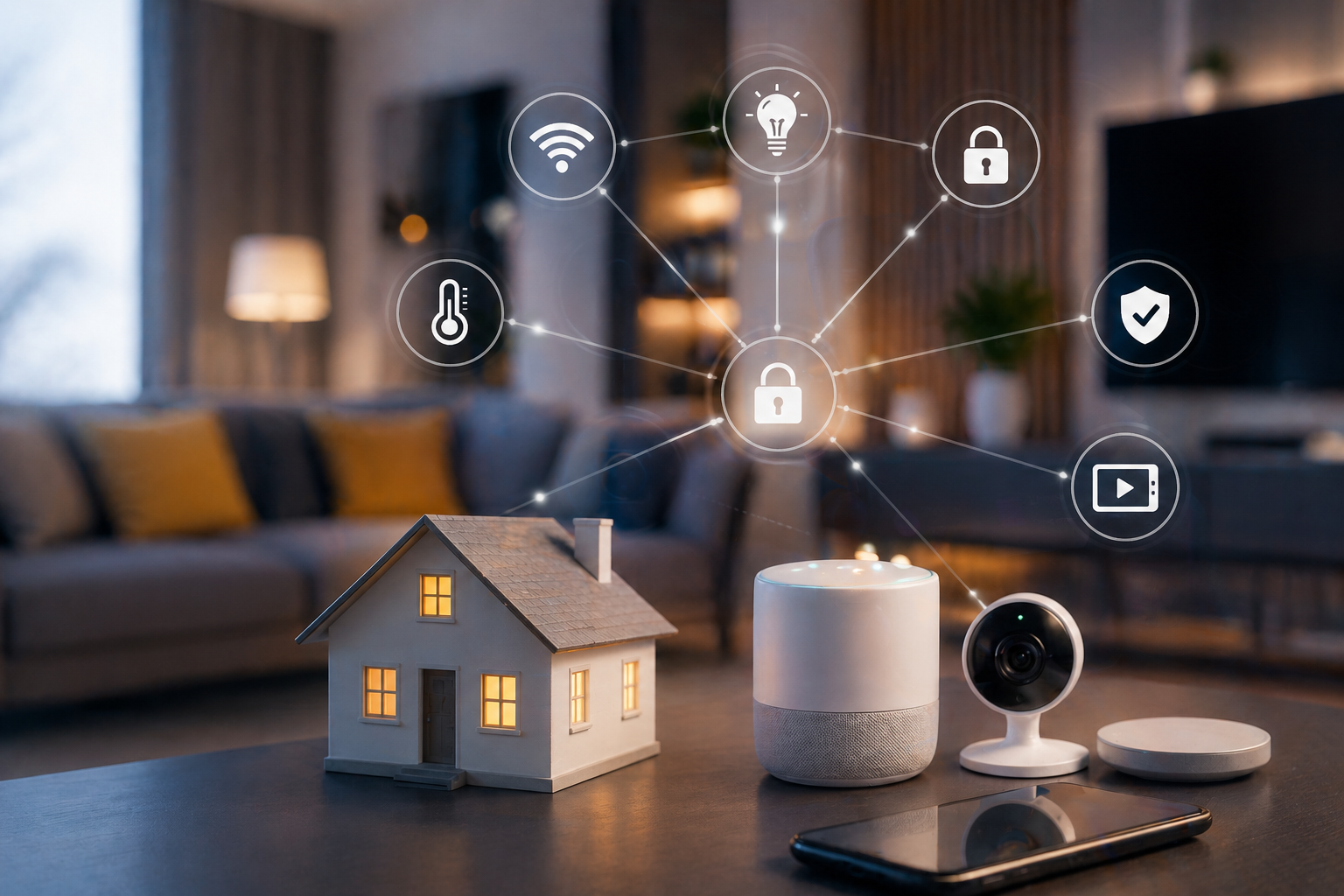
"Smart home" technologies are becoming a familiar part of everyday life for Russians. According to a study by Lemana Pro, over 70% of buyers of home renovation and improvement products have already implemented some form of home automation solutions. At the same time, user engagement remains consistently high, and interest in the category continues to grow.
Prevalence and level of use
According to the survey, 41% of respondents use individual smart devices or features, 20% have implemented integrated solutions, and 10% have fully automated their homes. More than half of system owners (51%) use them daily, while another 38% use them several times a week. Only a small share rarely uses the technologies or hardly uses them at all.
Budgets for smart solutions
Buyers show a willingness to invest in home automation, but budgets are unevenly distributed.
Thus, the main demand is concentrated in the affordable and mid‑price solution segment.
Most popular features
Among smart home users, the most in‑demand features are:
Resource consumption monitoring, climate control, automatic blinds, and centralized control via apps are also in demand.
How smart homes are implemented
Most users… [sentence incomplete in original] …5–10% above the base cost.
Control methods
The most popular control method remains the mobile app (59%). Also actively used are:
Some users combine all available control methods.
Market growth potential
Among those who do not yet use smart technologies:
This indicates significant growth potential for the category, especially among audiences still in the decision‑making stage.
Barriers and concerns
The main obstacle remains price, cited by 58% of respondents. Other factors include:
Interestingly, lower cost is not a universal incentive: over half of respondents said it would not affect their decision.
Benefits and value
Users consider the main advantages of a smart home to be:
Other benefits noted include convenience for families with children and elderly members, as well as climate control.
Risks that concern users
Key concerns include:
Nevertheless, 14% of users see no risks at all in using such systems.
Selection criteria
When purchasing a smart home system, reliability is the top priority (62%). Also important are:
Design and brand play a secondary role.
Expectations for future features
Users would like systems to offer:
Source
Prevalence and level of use
According to the survey, 41% of respondents use individual smart devices or features, 20% have implemented integrated solutions, and 10% have fully automated their homes. More than half of system owners (51%) use them daily, while another 38% use them several times a week. Only a small share rarely uses the technologies or hardly uses them at all.
Budgets for smart solutions
Buyers show a willingness to invest in home automation, but budgets are unevenly distributed.
- 21% are willing to spend up to 5,000 rubles
- 16% — from 5,000 to 10,000 rubles
- 20% — from 10,000 to 30,000 rubles
- 12% — from 30,000 to 50,000 rubles
- 6% — from 50,000 to 100,000 rubles
- 1% — over 100,000 rubles
Thus, the main demand is concentrated in the affordable and mid‑price solution segment.
Most popular features
Among smart home users, the most in‑demand features are:
- Voice assistants and aides (62%)
- Automated lighting (49%)
- Video surveillance and alarm systems (45%)
- Appliance control (43%)
- Leak, smoke, and gas sensors (41%)
- Smart locks and access control systems (37%)
Resource consumption monitoring, climate control, automatic blinds, and centralized control via apps are also in demand.
How smart homes are implemented
Most users… [sentence incomplete in original] …5–10% above the base cost.
Control methods
The most popular control method remains the mobile app (59%). Also actively used are:
- Voice commands (48%)
- Physical buttons and remotes (35%)
- Automated scenarios (16%)
Some users combine all available control methods.
Market growth potential
Among those who do not yet use smart technologies:
- 29% plan to adopt them
- 7% are confident they will
- 42% are still undecided
- 22% are not considering installation
This indicates significant growth potential for the category, especially among audiences still in the decision‑making stage.
Barriers and concerns
The main obstacle remains price, cited by 58% of respondents. Other factors include:
- Setup complexity (22%)
- Lack of obvious benefit (20%)
- Distrust of technology (14%)
- Risk of malfunctions (14%)
Interestingly, lower cost is not a universal incentive: over half of respondents said it would not affect their decision.
Benefits and value
Users consider the main advantages of a smart home to be:
- Comfort and automation (46%)
- Remote control (45%)
- Security (42%)
- Resource savings (38%)
Other benefits noted include convenience for families with children and elderly members, as well as climate control.
Risks that concern users
Key concerns include:
- Dependence on the internet (49%)
- Possible breakdowns (43%)
- High maintenance costs (42%)
- Data leaks (40%)
Nevertheless, 14% of users see no risks at all in using such systems.
Selection criteria
When purchasing a smart home system, reliability is the top priority (62%). Also important are:
- Functionality and price (49% each)
- Ease of installation (42%)
- Device compatibility (33%)
Design and brand play a secondary role.
Expectations for future features
Users would like systems to offer:
- Malfunction notifications (64%)
- Enhanced security features (62%)
- Resource consumption data (48%)
- Appliance health monitoring (43%)
Source