Trust and benevolence toward opinion leaders are a feature of the Chinese mentality. Chinese consumers are skeptical of traditional advertising and do not trust impersonal marketing information. Instead, internet users discuss brands and products on social media, are interested in each other’s opinions, and trust information from celebrities and opinion leaders. While in Russian and Western internet segments bloggers often get sharp negative feedback for publishing sponsored posts, Chinese consumers accept such advertising without negativity and trust commercial messages from well-known people. Together with Business Panda—a company that helps Russian brands enter the Chinese market—we’ll explore these and other features of online shopping in China.
4 Main Ways to Search for Products Online
1. Large online hypermarkets and marketplaces (Taobao, JD, Weipinhui)
Most people, including those in the West, start their searches on such platforms.
2. Social media platforms and messengers (WeChat, Weibo, Youku)
Consumers increasingly use these platforms for shopping. Here you can see user reviews and blogger opinions. The interface makes it easy to make purchases, participate in loyalty programs, and share links to products.
3. Specialized and mono-brand platforms
For example, for children’s products, the most popular parenting site in China is Babytree.
4. Search Engines (Baidu, Sogo)
This is the least popular and used method for searching for products in China.
Reviews and Recommendations
Recommendations and word-of-mouth are also powerful sales tools in China. One reason why consumers rely on recommendations is a sense of belonging to a certain lifestyle. They listen to discussions about brands and respect others’ opinions. By making a purchase, they demonstrate adherence to something and share it with other users.
There are four main sources of reviews and recommendations: celebrities (the most influential group), popular bloggers, friends and family, and previous buyers.
Types of Bloggers
4 Main Ways to Search for Products Online
1. Large online hypermarkets and marketplaces (Taobao, JD, Weipinhui)
Most people, including those in the West, start their searches on such platforms.
2. Social media platforms and messengers (WeChat, Weibo, Youku)
Consumers increasingly use these platforms for shopping. Here you can see user reviews and blogger opinions. The interface makes it easy to make purchases, participate in loyalty programs, and share links to products.
3. Specialized and mono-brand platforms
For example, for children’s products, the most popular parenting site in China is Babytree.
4. Search Engines (Baidu, Sogo)
This is the least popular and used method for searching for products in China.
Reviews and Recommendations
Recommendations and word-of-mouth are also powerful sales tools in China. One reason why consumers rely on recommendations is a sense of belonging to a certain lifestyle. They listen to discussions about brands and respect others’ opinions. By making a purchase, they demonstrate adherence to something and share it with other users.
- 80% of online shoppers consider recommendations from friends and family
- 41% leave a review after making a purchase (the global average is 21%)
- 64% of consumers trust comments from other buyers
There are four main sources of reviews and recommendations: celebrities (the most influential group), popular bloggers, friends and family, and previous buyers.
Types of Bloggers
There are several types of bloggers in China, and they influence buyers in different ways.
Authoritative Experts, Opinion Leaders
These are individuals who are experts in their fields. They conduct research for consumers, sift through large volumes of information, and distill key points for their followers. For instance, fashion bloggers do a lot of reviews and inform their readers about the main trends.
Web Celebrities or Vloggers (Video Bloggers)
These people gain popularity and authority by sharing details about their personal lives. They do not create expert content on a specific topic but simply give insights into their lifestyle.
Celebrity Blogs
There are also communities called “wemedia” (Weibo and WeChat both start with "we"). Wemedia outlets are similar to magazines or newspapers that recommend products and services—like the magazine TimeOut—but are distributed only through social networks.
Livestreaming
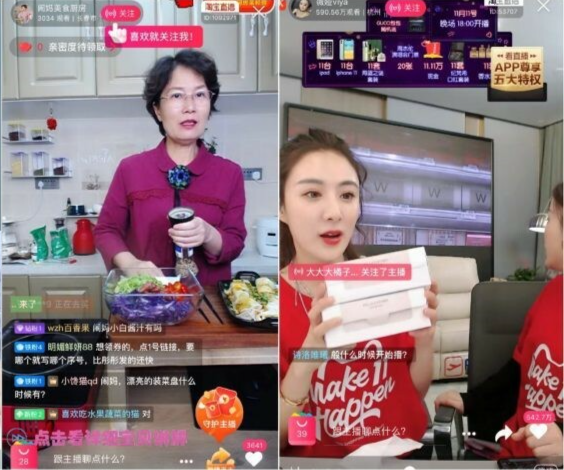
Every online platform in China offers a livestream feature. For example, when you visit Taobao to shop, you can watch live broadcasts before making a purchase. If you are searching for a sweater, jacket, or jeans, you can immediately see how these items look when tried on or worn. It’s somewhat reminiscent of TV shopping in the 1980s and 1990s, where women on screen would show off a ring and assert how beautiful it was, and the TV would say, “If you call now, you can buy two for the price of one.” Viewers would then rush to dial the number. The same thing now happens on Taobao, WeChat, and other platforms—many products can be purchased with a single click. When the livestream ends, the video can be saved to your phone.
Chinese social networks employ a “see-and-buy” principle. Many posts on Weibo and WeChat have a direct link, allowing the user to purchase with one click. First, you have to entertain the potential buyer and tell them about how to use the product. Only after that do you focus on the product itself—say, the polo shirt, its price, and the opportunity to buy in just one click.
In 2020, online livestreams—known as “streams”—became essential. Various streaming platforms are evolving and gaining popularity. The coronavirus epidemic accelerated the move online for work, entertainment, and consumption.
E-commerce via streaming platforms is growing daily. Currently, there is a trend among executives of major companies to participate in livestream selling. Luo Yonghao, one of China’s most famous tech entrepreneurs, took part in such an “online battle” in April this year, earning more than 10 million yuan (about $15 million) during his stream. Dong Mingzhu, president of leading home appliance maker Gree Electric, sold over 300 million yuan ($42 million) worth of goods via Kuaishou (a short video streaming platform) and 700 million yuan ($98 million) in the JD.com online hypermarket.
During the pandemic—and with the development of 5G technology—livestreaming found even more prospects. The capabilities of 5G have dramatically improved streaming, providing a more stable signal and a clearer picture. In addition to retail, livestreaming has also proven beneficial in education, entertainment, and tourism.
Authoritative Experts, Opinion Leaders
These are individuals who are experts in their fields. They conduct research for consumers, sift through large volumes of information, and distill key points for their followers. For instance, fashion bloggers do a lot of reviews and inform their readers about the main trends.
Web Celebrities or Vloggers (Video Bloggers)
These people gain popularity and authority by sharing details about their personal lives. They do not create expert content on a specific topic but simply give insights into their lifestyle.
Celebrity Blogs
There are also communities called “wemedia” (Weibo and WeChat both start with "we"). Wemedia outlets are similar to magazines or newspapers that recommend products and services—like the magazine TimeOut—but are distributed only through social networks.
Livestreaming
Every online platform in China offers a livestream feature. For example, when you visit Taobao to shop, you can watch live broadcasts before making a purchase. If you are searching for a sweater, jacket, or jeans, you can immediately see how these items look when tried on or worn. It’s somewhat reminiscent of TV shopping in the 1980s and 1990s, where women on screen would show off a ring and assert how beautiful it was, and the TV would say, “If you call now, you can buy two for the price of one.” Viewers would then rush to dial the number. The same thing now happens on Taobao, WeChat, and other platforms—many products can be purchased with a single click. When the livestream ends, the video can be saved to your phone.
Chinese social networks employ a “see-and-buy” principle. Many posts on Weibo and WeChat have a direct link, allowing the user to purchase with one click. First, you have to entertain the potential buyer and tell them about how to use the product. Only after that do you focus on the product itself—say, the polo shirt, its price, and the opportunity to buy in just one click.
In 2020, online livestreams—known as “streams”—became essential. Various streaming platforms are evolving and gaining popularity. The coronavirus epidemic accelerated the move online for work, entertainment, and consumption.
E-commerce via streaming platforms is growing daily. Currently, there is a trend among executives of major companies to participate in livestream selling. Luo Yonghao, one of China’s most famous tech entrepreneurs, took part in such an “online battle” in April this year, earning more than 10 million yuan (about $15 million) during his stream. Dong Mingzhu, president of leading home appliance maker Gree Electric, sold over 300 million yuan ($42 million) worth of goods via Kuaishou (a short video streaming platform) and 700 million yuan ($98 million) in the JD.com online hypermarket.
During the pandemic—and with the development of 5G technology—livestreaming found even more prospects. The capabilities of 5G have dramatically improved streaming, providing a more stable signal and a clearer picture. In addition to retail, livestreaming has also proven beneficial in education, entertainment, and tourism.



About Business Panda
Business Panda is the operator of the "Russian Commodities Pavilion" project in Chengdu, Sichuan Province, PRC—one of the largest platforms, bringing together over 1,000 Chinese trading agents.
The Russian Commodities Pavilion is a platform for efficiently bringing Russian brands’ products to the Chinese market and for building cultural, economic, regional, and intergovernmental ties. The project is implemented with the support of the Chengdu Bureau of Commerce (PRC).
Business Panda LLC wishes you a successful start and great sales volumes in the Chinese export market.
Business Panda is the operator of the "Russian Commodities Pavilion" project in Chengdu, Sichuan Province, PRC—one of the largest platforms, bringing together over 1,000 Chinese trading agents.
The Russian Commodities Pavilion is a platform for efficiently bringing Russian brands’ products to the Chinese market and for building cultural, economic, regional, and intergovernmental ties. The project is implemented with the support of the Chengdu Bureau of Commerce (PRC).
Business Panda LLC wishes you a successful start and great sales volumes in the Chinese export market.